Stone vs Stainless Steel Atta Chakki – Which Is Better for Home Use?
When it comes to choosing the best atta chakki for home use in India, one of the most common questions is whether to go for a stone-based flour mill or a stainless steel (stoneless) flour mill. Both have their advantages and limitations. This guide breaks down their key differences, helping you decide which one suits your family’s needs, usage style, and budget.
Understanding the Two Types of Domestic Atta Chakkis
Before comparing, let’s understand how each type works:
- Stone Atta Chakki: This type uses two grinding stones (often made of emery) that crush the grains into flour through slow rotation. It’s the traditional method used for centuries in India and is known for preserving natural taste and nutrients.
- Stainless Steel (Stoneless) Atta Chakki: This modern version uses high-speed stainless steel or alloy blades to grind the grains. It is more compact, easier to clean, and suitable for modern urban households.
Stone vs Stainless Steel Atta Chakki – Detailed Comparison
| Feature | Stone Atta Chakki | Stainless Steel (Stoneless) Atta Chakki |
|---|---|---|
| Grinding Method | Uses natural or emery stones for slow grinding | Uses high-speed stainless steel blades |
| Texture of Flour | Produces coarser, more traditional flour with natural aroma | Produces finer flour suitable for modern baking and cooking |
| Nutrient Retention | Better nutrient retention due to less heat during grinding | High-speed grinding generates more heat, causing minor nutrient loss |
| Maintenance | Requires cleaning and occasional replacement of stones | Low maintenance; easy to clean with a detachable chamber |
| Noise Level | Relatively quieter due to slower rotation | It can be noisy at high speeds |
| Durability | Long-lasting if maintained well | Highly durable due to steel blades and body |
| Power Consumption | Consumes less electricity (low RPM) | Consumes slightly more due to the high RPM motor |
| Price Range | ₹10,000 – ₹18,000 (depending on model and capacity) | ₹12,000 – ₹25,000 (premium models with features) |
| Ideal For | Traditional households that prefer hand-chakki style flour | Modern kitchens need convenience and speed |
Advantages of Stone Atta Chakki
- Retains the natural taste and nutrition of grains.
- Low-speed grinding avoids overheating of flour.
- Less expensive compared to automatic steel mills.
- Traditional aroma and coarser texture – ideal for chapatis and rotis.
Advantages of Stainless Steel Atta Chakki
- Fast and efficient grinding – saves time.
- Easy to clean and maintain.
- Compact design suitable for small kitchens.
- Less messy and includes automatic cleaning in premium models.
🔥 Best Atta Chakkis to Buy Online (Stone & Stainless Steel)
After comparing stone vs stainless-steel atta chakkis, here are some top-rated options you can buy on Amazon India. Check the latest prices and reviews below.
⭐ Top Stone Atta Chakkis
1. Natraj Viva Domestic Flour Mill (Stone Mechanism)
- 7-8 kg/hr output
- Traditional grinding stone technology
- Works with wheat, millets, pulses
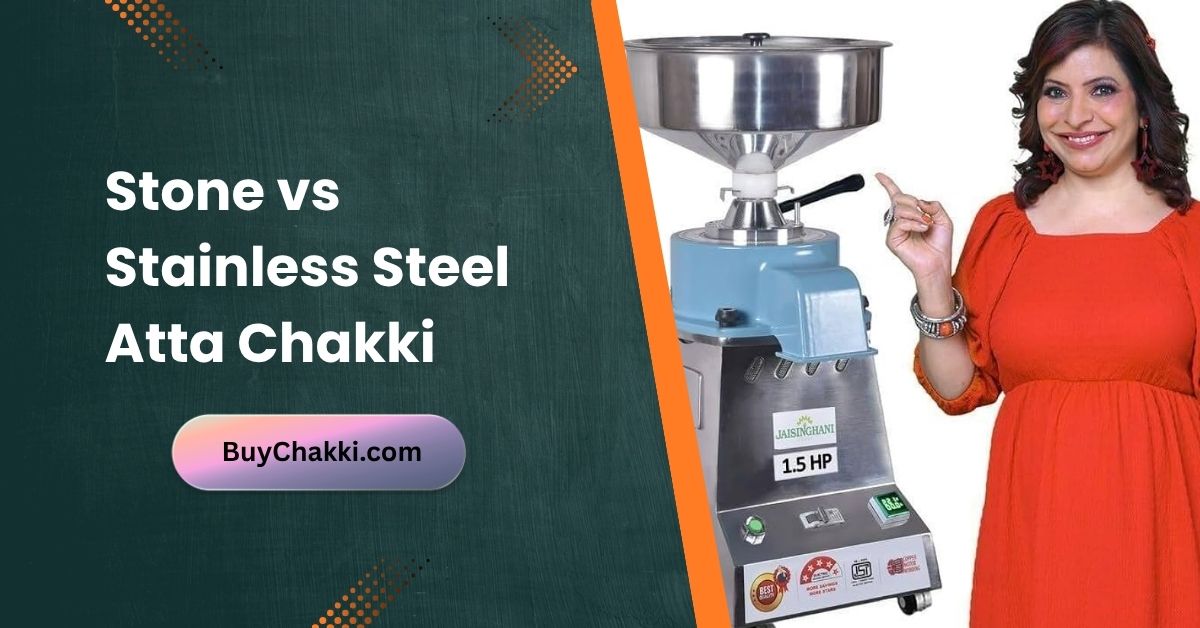
2. Jaisinghani Group 1.5 HP Stone Flour Mill
- Heavy-duty grinding stone
- Energy-efficient motor
- Lifetime warranty on motor
⭐ Top Stainless Steel Atta Chakkis
1. Milan Atta Chakki
- Modern & compact design
- Easy cleaning
- Great for daily home grinding
2. MicroActive Stainless Steel Flour Mill
- 1 HP copper motor
- Stainless-steel chamber
- Low maintenance
Quick Comparison: Best Picks
| Category | Best Pick | Link |
|---|---|---|
| Best Stone Atta Chakki | Natraj Viva Stone Grinder | View |
| Best Stainless Steel Atta Chakki | MicroActive SS Flour Mill | View |
| Budget-Friendly Option | Milan Atta Chakki | View |
| Premium Option | Jaisinghani Group | View |
Limitations to Consider
Both types have certain downsides you should be aware of:
- Stone Atta Chakki: Requires manual cleaning, is heavier, and may wear out the stones over time.
- Stainless Steel Chakki: May generate heat, slightly affecting nutrient retention; also noisier and more power-hungry.
Which One Should You Choose?
If you prefer the authentic taste, aroma, and texture of traditional chapatis or rotis, go for a stone atta chakki. It’s perfect for families who grind larger batches weekly and value traditional methods.
If you want speed, hygiene, and minimal maintenance, then a stainless steel (stoneless) atta chakki is ideal. It’s best suited for urban families with busy lifestyles who grind smaller quantities regularly.
Expert Recommendation
For most Indian households, a stoneless atta chakki offers better convenience, lower upkeep, and modern aesthetics. However, if health and natural flavor are your top priorities, a stone chakki is hard to beat.
FAQs – Stone vs Stainless Steel Atta Chakki
1. Which atta chakki gives better quality flour?
Stone chakkis produce more natural, aromatic flour because of their low-speed grinding process. Stainless steel chakkis give a finer flour texture suitable for modern dishes, but may lose a bit of natural aroma.
2. Does the stone chakki consume less power?
Yes. Stone atta chakkis generally run at lower RPM and consume less electricity compared to high-speed stainless steel ones.
3. How often should I replace the grinding stones?
Depending on usage, grinding stones may last 3–5 years. If you notice uneven grinding or excessive noise, it might be time for replacement.
4. Is the stainless steel chakki noisy?
Yes, due to the high-speed motor and steel blades, stoneless chakkis tend to make more noise during operation. Some models have soundproof cabinets to reduce it.
5. Which type requires less maintenance?
Stainless steel atta chakkis are easier to clean and maintain. Most models have detachable grinding chambers and built-in vacuum cleaning.
6. Can both grind all types of grains?
Yes, both can grind wheat, rice, millet, maize, and pulses. However, stone mills handle coarse grains better, while stoneless mills are ideal for fine powder consistency.
7. Which is more durable?
Stainless steel chakkis usually have a longer lifespan due to their robust metal build and fewer moving stone parts. Stone chakkis can also last long with proper care and maintenance.
Final Verdict
Both stone and stainless steel atta chakkis have unique benefits. If tradition, taste, and natural nutrients matter most, go with a stone chakki. If convenience, modern design, and ease of maintenance are your priorities, a stainless steel chakki is the smarter pick. In the end, the “best” choice depends on your household’s grinding habits, kitchen space, and budget.
Looking for top models in both categories? Check out our latest comparison of Best Atta Chakkis for Home Use in India.